
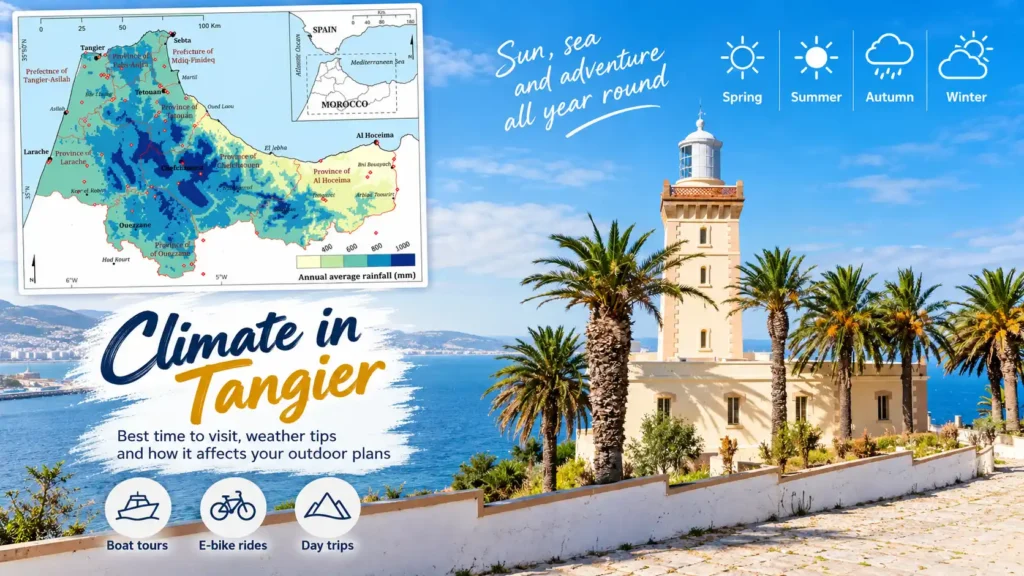
The climate in Tangier plays a significant role in shaping visitors’ experiences throughout the year, especially when planning trips to northern Morocco’s nearby mountain town of Chefchaouen. Knowing what to wear in each season and how the weather differs between the coastal city of Tangier and the higher-altitude Chefchaouen can make travel more comfortable and enjoyable.
Key takeaways
- Tangier has a mild Mediterranean climate with warm summers and mild winters.
- Chefchaouen is cooler year-round due to its elevation in the Rif Mountains.
- Layering is essential for cooler mountain air, especially in autumn and winter.
- Lightweight and breathable clothing suits Tangier in spring and summer.
- Insulated outerwear is advisable in Chefchaouen’s colder seasons.
What Is the General Climate in Tangier?
Tangier experiences a Mediterranean climate typical of northern Morocco’s Atlantic coast. The city’s weather is influenced by both the sea and its geographic position, resulting in mild winters with moderate rainfall and warm, dry summers. Visitors can expect relatively stable and comfortable climate conditions compared to many other parts of Morocco.
In Tangier, spring brings gradually warming days, making it suitable for light jackets or long sleeves in the mornings and evenings. Summer is characterized by warm temperatures and sunny skies, where short sleeves, hats, and sun protection are recommended. Autumn cools down but remains pleasant and dry. Winters in Tangier are mild but damp, so warmer layers and waterproof clothing can be helpful.
How Does the Climate in Tangier Compare to Chefchaouen?
Chefchaouen sits in the Rif Mountains at an elevation of about 600 meters, which gives the town a noticeably cooler climate compared to Tangier. While both locations share a Mediterranean pattern, Chefchaouen’s higher altitude leads to chillier temperatures, especially in the early mornings, evenings, and winter months.
Visitors to Chefchaouen should be prepared for temperature drops that can require warmer clothing year-round. During spring and summer, lighter layers are appropriate but having a sweater or jacket is advisable due to cooler mountain breezes. Autumn and winter bring cooler and sometimes rainy conditions where insulated outerwear and sturdy footwear are sensible choices.
What to Wear in Tangier Across the Seasons?
- Spring (March-May): Light jackets, long sleeves, and layers for mornings and evenings. Breathable fabrics for warmer afternoons.
- Summer (June-August): Lightweight clothing like t-shirts, shorts, and dresses. Sun hats and sunglasses recommended.
- Autumn (September-November): Transitional layers such as cardigans or light sweaters. Comfortable pants and closed shoes.
- Winter (December-February): Warmer coats or jackets, layered tops, and waterproof options for rainy days.
What to Wear in Chefchaouen During the Same Periods?
- Spring: Layered clothing including sweaters and a light jacket. Morning and evening chills are common.
- Summer: Light shirts and pants during the day, but bring a jacket or shawl for cooler periods.
- Autumn: Warm layers, including jumpers and a heavier jacket. Comfortable walking shoes help on potentially damp surfaces.
- Winter: Insulated jackets, scarves, and gloves may be necessary as temperatures drop further than in Tangier.
Planning Your Trip from Tangier to Chefchaouen with Seasonal Climate in Mind
The two-hour drive from Tangier to Chefchaouen transports travelers from coastal Mediterranean warmth to the cooler mountain environment. A day trip to Chefchaouen from Tangier involves spending around four hours exploring the medina, Kasbah museum, Plaza Uta el-Hammam, Ras el-Ma spring, and the Spanish Mosque viewpoint. Adjusting what to wear and bringing adaptable layers ensures comfort during this short but rewarding visit.
For travelers planning this route, the shared day trip is an economical choice for solo travelers and small groups with a fixed schedule. Private day trips offer flexibility in departure time and pickup locations, ideal for families or larger groups wanting their own pace. More details about these options are available on ToChefchaouen’s website.
Recommendation: For those considering seasonal changes and comfort during the journey, a private day trip from Tangier to Chefchaouen allows customization in timing and pickup location, which is valuable when layering or dealing with cooler mountain weather.
Summary: Climate in Tangier Versus Chefchaouen
Understanding the differences in climate between Tangier and Chefchaouen helps visitors pack efficiently and enjoy both cities comfortably. Tangier’s Mediterranean coastal climate is generally warmer and milder, whereas Chefchaouen’s mountain location brings cooler temperatures requiring warmer clothing. Both destinations offer distinct experiences shaped by their climates within northern Morocco.
Frequently Asked Questions
Is the climate in Tangier humid?
Tangier has a moderate humidity level due to its location on the Atlantic coast, resulting in a mild Mediterranean climate with damp winters and dry summers.
Does Chefchaouen get snow in winter?
Snow in Chefchaouen is uncommon but possible during cold spells because of its elevation in the Rif Mountains, so visitors should be prepared for cooler conditions.
Can I wear summer clothes in Chefchaouen during summer?
Yes, but it is best to include a light jacket or sweater for the cooler mornings and evenings typical in the mountain environment.
Are there big temperature differences between day and night in Tangier?
Tangier experiences moderate temperature differences between day and night, which are more pronounced in the shoulder seasons like spring and autumn.
Is rain common in Tangier during winter?
Yes, the winter months in Tangier bring some rainfall, so carrying water-resistant outerwear is advisable for visitors.